Learn the ultimate Ninjutsu knife defense drills from the Bujinkan tradition, a comprehensive guide to mastering the art of self-defense with a wooden knife. In this video, we’ll take you through a series of flow drills designed to improve your reaction time, agility, and technique against a knife attack.
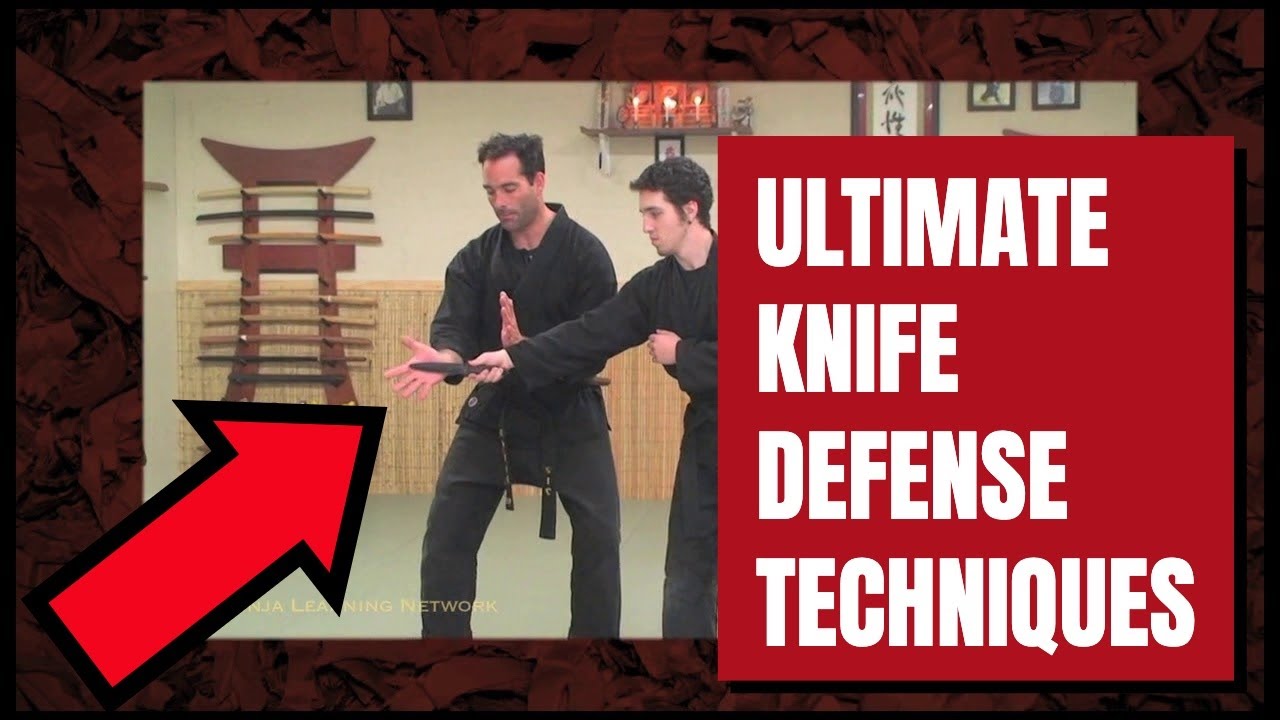
This video shows practical training tips for rubber, safe “fake knife” (tanto) drills at the dojo. These kinds of drills are typical for many martial arts schools, not just Ninjutsu, Bujinkan, etc, of course.
Discover the fundamental principles of Ninjutsu and Ninpo, the ancient art of the Shinobi, and how to apply them in real-life self-defense situations. Our expert instructors will guide you through each drill, providing detailed explanations and demonstrations to ensure you master the techniques.
Whether you’re a beginner looking to learn Ninjutsu basics or an experienced practitioner seeking to improve your skills, this video is for you. Our training methods are inspired by the teachings of Soke Hatsumi, the legendary founder of the Bujinkan Dojo.
OTHER STYLES OF KNIFE SELF DEFENSE:
Filipino Martial Arts (FMA) – Kali, Eskrima, Arnis
Filipino Martial Arts, including Kali, Eskrima, and Arnis, place a heavy emphasis on weapons training, particularly with knives, sticks, and swords. Practitioners use rubber knives to practice flow drills, counterattacks, and disarming techniques in a safe yet realistic manner. The training often involves fast-paced movements, reflex development, and defensive strategies against armed opponents.
Krav Maga
Krav Maga, the Israeli self-defense system, is known for its practical and aggressive approach to combat. Knife defense plays a significant role in its training, with rubber knives used to simulate realistic threats. Practitioners learn to react quickly to knife attacks, focusing on evasion, disarming, and countering an assailant. High-stress scenario-based drills help develop instinctive reactions under pressure.
Silat
Silat, a martial art from Southeast Asia, is well-known for its deadly efficiency in knife combat. Many Silat styles incorporate knife-fighting techniques that involve slashing, thrusting, and counterattacking. To train safely, practitioners use rubber knives to practice fluid movements, deception, and rapid engagements that mimic real-world knife encounters.
Systema
Systema, the Russian martial art, has a unique approach to knife defense that focuses on relaxed, fluid movements. Instead of rigid blocks and counters, Systema practitioners use evasive maneuvers, redirection, and control techniques to neutralize a knife attack. Rubber knives are used in dynamic drills that emphasize adaptability and calmness under pressure.
Japanese Jujutsu & Ninjutsu
Traditional Japanese martial arts, such as Jujutsu and Ninjutsu, also include knife defense techniques. The tanto, a short Japanese blade, is often simulated with rubber or wooden training knives to practice countering knife attacks. These arts emphasize joint locks, throws, and redirection to control or neutralize an armed opponent.
Military & Law Enforcement Training
Many military and law enforcement defensive tactics programs incorporate knife defense training using rubber knives. These drills are designed to prepare personnel for real-world encounters, focusing on weapon retention, defensive strategies, and engagement techniques. Training often includes scenario-based exercises that simulate high-risk confrontations.
er knives.
REFERENCES:
Sure! Here are two quality hyperlinks and cited references for each topic, providing further reading and video demonstrations where applicable.
Filipino Martial Arts (FMA) – Kali, Eskrima, Arnis
- Kali Knife Fighting Techniques – An article explaining knife combat concepts in Kali. Read more here.
- Eskrima Knife Defense Drills – A video demonstration of knife training techniques. Watch here.
???? References:
- Wiley, M. (1994). Filipino Martial Culture. Tuttle Publishing.
- Inosanto, D. (1980). The Filipino Martial Arts. Know Now Publishing.
Krav Maga
- Krav Maga Knife Defense Guide – An overview of Krav Maga techniques for handling knife attacks. Read more here.
- Krav Maga Knife Disarm Techniques – A training video showcasing knife defense drills. Watch here.
???? References:
- Levine, D., & Whitman, J. (2016). Krav Maga Defense: How to Protect Yourself Against the 12 Most Common Unarmed Street Attacks. St. Martin’s Griffin.
- Lichtenfeld, I. (2001). Krav Maga: How to Defend Yourself Against Armed Assault. Blue Snake Books.
Silat
- Silat Knife Combat Overview – A breakdown of how Silat approaches knife fighting. Read more here.
- Silat Knife Fighting Techniques – A video demonstrating Silat knife tactics. Watch here.
???? References:
- Draeger, D. F. (1979). Weapons and Fighting Arts of Indonesia. Tuttle Publishing.
- de Thouars, V. (1998). The Pentjak Silat of Bukti Negara. Unique Publications.
Systema
- Systema Knife Defense Principles – A guide on Systema’s approach to handling knife threats. Read more here.
- Systema Knife Defense Training – A video demonstrating fluid knife defense tactics. Watch here.
???? References:
- Vasiliev, V. (2012). Let Every Breath… Secrets of the Russian Breath Masters. Systema HQ.
- Ryabko, M. (2009). Systema: Russian Martial Art – Knife Defense & Combat Strategy. Systema Publications.
Japanese Jujutsu & Ninjutsu
- Tanto Jutsu Knife Defense – A breakdown of traditional Japanese knife-fighting methods. Read more here.
- Ninjutsu Knife Training Techniques – A video demonstrating traditional tanto-jutsu applications. Watch here.
???? References:
- Hatsumi, M. (2004). The Way of the Ninja: Secret Techniques. Kodansha International.
- Skoss, D. (1999). Koryu Bujutsu: Classical Warrior Traditions of Japan. Koryu Books.
Military & Law Enforcement Training
- Military Knife Defense Tactics – A U.S. military manual covering close combat with knives. Read more here.
- Police Defensive Knife Tactics – A video demonstration of law enforcement knife defense strategies. Watch here.
???? References:
- U.S. Army (2009). Field Manual FM 3-25.150: Combatives. Department of the Army.
- Grossman, D. & Christensen, L. (2008). On Combat: The Psychology and Physiology of Deadly Conflict in War and in Peace. Warrior Science Publications.
These sources should give you a solid foundation for understanding how different martial arts train with rubber knives. Let me know if you need more details!